Why Your E-Commerce Platform Needs ACID Compliance (And How Momen Gets It Right)

The $10,000 Question
Imagine this scenario: It's Black Friday. Your online store has one last unit of your most popular product in stock. At 11:59:59 PM, five customers click "Buy Now" at nearly the same millisecond.
Question: How many of them successfully place an order?
If you answered "one," you're correct—in theory. But in practice, depending on your platform, the answer might be "all five," leaving you with -4 units in inventory and four very angry customers expecting products you don't have.
This isn't a hypothetical edge case. It's a fundamental technical challenge that every e-commerce platform must solve. And how your development platform handles it reveals everything about whether it's built on solid architectural foundations—or clever workarounds.
The Race Condition Problem
Here's what happens under the hood when multiple users try to buy the same item:
User A's browser reads: "Inventory = 1"
User B's browser reads: "Inventory = 1" (at the same time)
User A's system calculates: 1 - 1 = 0, then writes "Inventory = 0"
User B's system calculates: 1 - 1 = 0, then writes "Inventory = 0"
Both users successfully "bought" the item. But the system only deducted the inventory once. This is called a race condition—and it's one of the most common causes of data corruption in web applications.
The ACID Test
Professional database systems solve this with a set of principles known as ACID:
Atomicity: Operations either complete entirely or don't happen at all
Consistency: Data remains valid according to all defined rules
Isolation: Concurrent operations don't interfere with each other
Durability: Completed transactions survive system failures
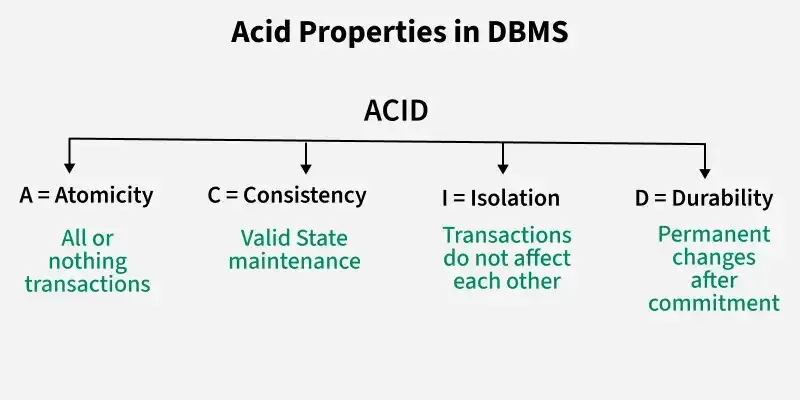
These aren't optional nice-to-haves. They're the foundation of reliable data management. Yet many popular low-code platforms treat them as afterthoughts.
How Other Platforms Handle This (Spoiler: Not Well)
Take Bubble, one of the most popular no-code platforms. When asked how it handles race conditions, even AI assistants acknowledge the problem: Bubble workflows lack native transaction support.
The workarounds developers are forced to use:
Recursive workflows: Processing purchases one-by-one in a queue (slow and complex)
Optimistic locking: Hoping conflicts don't happen and adding manual checks
Manual compensation logic: Writing code to "undo" operations when things go wrong
Here's the kicker: if the server crashes mid-workflow after deducting inventory but before creating the order record, you're left with a "dirty" database state. Stock is gone, but no order exists. You have to manually dig through logs and patch your database.
The Momen Difference: ACID by Design
Momen was architected from the ground up with database transactions at its core. Here's what that means:
1. Atomic Updates
When you build a "Purchase Item" workflow in Momen, the inventory update isn't "read value → calculate in app → write back." It's an atomic database operation: SET amount = amount - 1. The database handles the calculation, preventing race conditions entirely.
2. Transactional Workflows
Your entire backend workflow runs inside a database transaction. If any step fails—whether it's creating an order, processing payment, or updating inventory—the entire operation rolls back. Your database returns to its exact state before the workflow started.
Bubble: "Dirty death" (corrupted data, manual cleanup required)
Momen: "Clean death" (automatic rollback, zero data corruption)
3. Row-Level Locking
When User A starts updating an inventory record, Momen's database engine automatically locks that row. User B's request waits in queue. The moment User A's transaction completes, User B's request processes—based on the updated, accurate inventory count. No conflicts. No overselling.
A Real Technical Demonstration
To prove this isn't just marketing talk, let's look at what happens at the PostgreSQL level (Momen's underlying database):
Terminal Window A (User A):
BEGIN;
UPDATE inventory SET amount = amount - 1 WHERE id = 1;
-- [Don't type COMMIT yet]
Terminal Window B (User B):
BEGIN;
UPDATE inventory SET amount = amount - 1 WHERE id = 1;
-- [This command HANGS]
Window B freezes. It cannot proceed. The database won't let it touch that row until User A finishes.
The moment we type COMMIT in Window A, Window B immediately unfreezes and executes—now working with the accurate, updated inventory count.
This is row-level locking in action. This is ACID compliance. And this is how Momen ensures your data integrity, automatically, every single time.
Why Some Platforms Can't Do This
You might wonder: "Why don't all platforms just implement this?"
The answer: architectural tradeoffs.
Some platforms offer unlimited flexibility—run any Node.js code, connect to any service, deploy custom functions anywhere. But that flexibility comes at a cost. When your code runs in a separate process or serverless function, it's disconnected from the database transaction. If it crashes, there's no automatic rollback.
Momen makes a different choice. We constrain where and how backend code executes—specifically so it can participate in the same database transaction as your visual workflow. This ensures that whether you're writing visual logic blocks or custom JavaScript, everything operates within the same transactional boundary.
The result: You get the safety of ACID compliance without sacrificing the power to write custom business logic.
What This Means for Your Business
When evaluating low-code platforms, ask yourself:
Can the platform oversell inventory during high traffic?
If the server crashes mid-transaction, will my data be corrupted?
Do I need to become a database expert to prevent race conditions?
Will I spend hours debugging "dirty" data states?
With Momen, the answers are: No, No, No, and No.
Your business logic should focus on business problems, not compensating for architectural limitations. Momen handles the complex database orchestration so you don't have to.
Built on Solid Foundations
Creating a reliable platform isn't about adding features. It's about getting the fundamentals right. ACID compliance isn't glamorous, but it's the difference between a system that works under pressure and one that crumbles when traffic spikes.
Momen was designed with these principles from day one. We didn't bolt on transaction support as an afterthought or expect developers to implement their own concurrency controls. We built it into the foundation.
Because when you're building the next generation of web applications, you shouldn't have to choose between ease of development and data integrity.
You should have both.
Ready to build on a platform that respects your data? Try Momen today and experience the confidence of ACID-compliant workflows.

